Thứ Tư, 24 tháng 12, 2014

Buddhist legend in Keo Pagoda

The legend...

Come back to the history, legend said that a humble fisherman in the 11th century achieved enlightenment as a Buddhist monk and could thereby fly through the air, walk on water and tame snakes and tigers. However, the holy man Duong Khong Lo (1016-1094) secured his name firmly in his country’s history books when he used his magic powers to cure King Le Thanh Tong (1066-1127) of a terrible disease. Over 900 years later, residents of Vu Nhat Commune, Vu Thu District, Thai Binh Province still honour the Buddhist hero with a festival as mystical as the legend it recognises. Vietnam tours

The features
The flocks of visitors who come to witness the Autumn Festival, the province’s biggest cultural event of the year, have no trouble finding Keo Pagoda, located on the site where the Buddhist dignitary had pagoda built in the 17th Century. 5 reasons to have a Halong Bay overnight trip
Buddhist legend in Keo Pagoda

Keo pagoda is architecturally unique and stands at a scenic spot on the Red River Delta. The Pagoda is home to a wealth of ancient relics, from intricately engraved wooden dragons to a collection of over 100 statues. The pagoda also has valuable antiques including a pair of candlesticks from the Mac Dynasty, pottery ware and altars from the Le Dynasty, imperial boats and more, which are all as well preserved now as they were during the time of the Le Trung Hung Dynasty in 16th century. Vam Ho Bird Sanctuary

The yearly festival is celebrated from 13th to 15th of the ninth lunar month, 100 days after the death of the Buddhist dignitary Duong Khong Lo. The festival features religious and traditional rituals and customs held in celebration of the Buddhist monk who rendered great merits to the people and the country. The festival also hosts different traditional cultural activities reflecting the life style, which is imbued with traits of the Red River Delta’s agricultural culture.

The celebration

The pagoda’s own mythical appeal plays a significant role in drawing so many visitors to Vu Nhat Village each year on the 13th, 14th and 15th days of the ninth lunar month. Normally, people visit the commune to offer prayer at the Keo Pagoda in honor of the Buddhist monk. Similar to other Vietnam festivals and events, Keo Pagoda Festival commences with a procession of palanquin to remind people of the anniversary of Khong Lo’s death, followed by a boat race and a literary recital competition during the day. When night falls, it's time for music and a trumpet and drum competition, light from the main shrine illuminates preparations for the next day’s procession, prayers are offered until midnight.

On the 14th day of the ninth lunar month, in celebration of the birth anniversary of monk Khong Lo, in the morning, the procession ceremony comes after the incense-offering ritual. A carriage pulled by two pairs of white and pink wooden horses head the procession, accompanied by 8 flag bearers and 42 men carrying bat but luu bo, a classical Vietnamese weapon. Four people wearing black gauze outfits and white trousers, who carry a dragon in commemoration of Khong Lo’s journey by boat to the capital of the kingdom to treat King Ly Nhan Tong. Four people in the same outfit carrying a small gilded boat put in a stand, depicting the period of monk Khong Lo’s life when he was a fisherman. In the afternoon, at Gia Roi shrine, the mua ech vo (frog-catching dance) ritual pays respect to the gods, while incense is offered to Buddha.

The festival continues into the next day with further entertainment and traditional games such as duck catching, rice cooking competition and firecracker hurling competition. However, the most interesting performance that attracts a large number of tourist is the  boat rowing dance on land which is performed by 12 people in fine costumes, standing in two parallel lines like the way they sit in the boat. As one performer beats a small drum and another holds a wooden fish, the 12 performers "row" while flexing their legs and calling out rhythmically. This performance also puts an end to the three-day Keo Pagoda Festival.

It is believed that together with this meaningful festival, Keo Pagoda will remain an interesting tourist attraction and a pride for Vietnamese architects, Vu Nhat villagers and all of Thai Binh Province – as well as our whole country!

Thứ Tư, 17 tháng 12, 2014

National Tourism Year 2015 to connect world heritage

Viet Nam’s National Tourism Year 2015 will take the theme of “Connecting world heritage” with a series of activities taking place in the northern central province of Thanh Hoa, the designated main venue, local officials announced in Hanoi on December 9.
The programme, slated to be launched in March, will run throughout the year across the province and also attract the participation of 15 cities and provinces that house world heritage, such as Hanoi capital and Phu Tho and Quang Ninh provinces. Tours in Vietnam

Outstanding events include the Japanese Culture Days in January, an international stone sculpture camp in May, a cuisine festival in June, and other festivals on historical individuals and events.

The logo for the Year is a circle formed by eight traditional conical hats representing Vietnamese natural and cultural masterpieces recognised by the UNESCO with the image of the Ho Dynasty Citadel in Thanh Hoa at the centre Vietnam tours

The conical hats represent two natural heritage sites (Ha Long Bay and Phong Nha-Ke Bang National Park), five cultural heritage (the Central Sector of the Imperial Citadel of Thang Long, the Citadel of the Ho Dynasty, the Complex of Hue Monuments, Hoi An Ancient Town, My Son Sanctuary), and one mixed heritage (Trang An Landscape Complex).

The National Tourism Year 2015 is a great opportunity for Thanh Hoa to popularise tangible and intangible cultural values and beautiful landscapes of Viet Nam and its own so as to promote the national and provincial images, local officials said. North Vietnam tours
National Tourism Year 2015 to connect world heritage

At present, Viet Nam is home to 22 world heritage recognised by the UNESCO, including two natural heritages, five cultural heritages, nine intangible cultural heritages, four documentary heritages, one geological heritage, and one mixed heritage.

Thanh Hoa is located on mountainous-midland, lowland, and coastal terrains which are said to be favourable for developing tourism. It strives to make this industry spearhead its socio-economic development.

The province aims to welcome 100,000-120,000 foreign tourist arrivals and 5-5.3 million domestic visitors in the year and earn US$158.6 million in revenues.

Thứ Sáu, 5 tháng 12, 2014

Cruises in Bai Tu Long Bay

Although Halong Bay is already well known to most travellers who plan a trip to Vietnam, Bai Tu Long Bay remains a pleasant secret to those who dig deeper in the pool of travel information. The Bay is adjacent to Halong Bay and covers a vast body water with no less charming landscape. In fact, Bai Tu Long is favoured over Halong Bay by many for the more natural and less touristy feel that it creates.

About Bai Tu Long Bay

Bai Tu Long Bay lies to the northeast of Halong Bay, with the east bordering sea, the west bordering Cam Pha Town and also borders with Co To Island. With hundreds of islands of varying size, Bai Tu Long is an important attraction of the province. A few places of interest in Bai Tu Long Bay includes Van Don ecological site, white sand beaches, Hon Chong Islets, Ba Sao Islet, …

Bai Tu Long Bay has among the best beaches in the North of Vietnam such as Quan Lan and Van Don. What makes Bai Tu Long attract an increasing number of tourists is the natural feel it is able to retain.
Cruises in Bai Tu Long Bay

Cruises that take you to Bai Tu Long Bay

There are a small number of cruises currently operating in Bai Tu Long Bay, most of which departs from Hon Gai Harbour. To get to this harbor, one has to cross Bai Chay bridge – the longest central-line span of cable-stayed bridge in the world.

Indochina Junk vessels: includes Dragon Pearl, Red Dragon, Prince and Princess Junk. Indochina Junk is based on Hon Gai harbor and currently the most popular choice for tourists wanting to visit Bai Tu Long Bay. Indochina Junk offers a variety of activities and visit to main highlights in Bai Tu Long Bay. Tour length also vary from 2 day to week long tour.

Dragon Pearl Junk - 2 day 1 night tour from $125/person

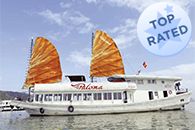
Paloma cruise: consists of one 2 cabin and one 16 cabin vessel. Paloma Cruise offers luxury and comfort at a reasonable price. Paloma Cruise currently offers 2 day and 3 day tour of Bai Tu Long Bay.

Paloma Cruise - 16 cabin vessel

Bai Tu Long junk: includes Bai Tu Long junk and White Dolphin Cruise. Bai Tu Long junk has a number of vessels for budget travelers and the deluxe White Dolphin cruise.

Twin deluxe cabin on Bai Tu Long Junk

Signature Cruise: the most luxurious currently operating in Bai Tu Long Bay, Signature Cruise was launched in early November of 2013. This is a brand new cruise with all the facilities you can ask for in a 5 star hotel. Signature also covers a number of main highlights of Bai Tu Long Bay.

Thứ Tư, 26 tháng 11, 2014

Vung Vieng fishing village

Far 24km from the mainland, Vung Vieng fishing village is located in the center of Bai Tu Long Bay to the northeast of Halong Bay tours. This is a peaceful place with the beautiful scenery and features with the traditional culture of fishermen living around the Bay all year round. Coming to Vung Vieng fishing village, you will have a chance to learn how to use fishing net or fishing rod from the local fisherman at this area.

Vung Vieng has attracted lots of travelers for years by its beauties like pretty fishing boats, fish’s cages being in front of floating houses of local people, especially friendly and helpful fishermen, children with happiness on their faces on the way to school,… Everything makes this village become an attractive destination in Halong Bay Heritage.

There are only about 60 floating houses meaning 60 families in this village. You will definitely surprise when seeing these small village with only tens of pretty floating houses in which every activities of the day life or important event of the village happen while bobbing in the middle of the bay. The amazing pictures that your eyes can catch here are simple small floating houses, films on old televisions, a woman cooking the dinner while children playing traditional games in front of the houses and the husband preparing for his fishing trip at night,…These pictures will bring you special memories about people here and the sense of peace in your holiday in Halong Bay.


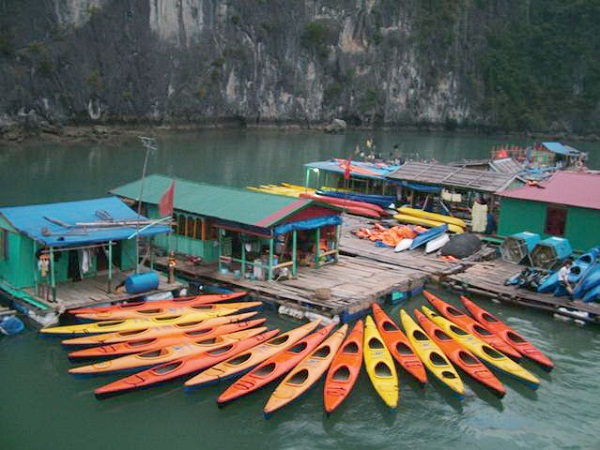
Almost people here live on fishing and aquaculture but there are several people do small business on their boats by selling miscellaneous goods for other ones and tourists. That’s one of the features in Halong Bay maybe you like because you can by something like snack, water,… from them while cruising on the bay but it’s quite expensive. Recently, when tourism has growth, Vung Vieng became famous place that is included in itineraries of travel companies. In order to explore this place, tourists can hire either kayak to discover bu yourself or small boats rowing by local people. These services are provided by cruise company and local people which brings more revenue for their families.

Thứ Ba, 18 tháng 11, 2014

Where To Go In Vietnam: North Or South?

Many who visit Vietnam say it’s one of the most colourful countries in all of Southeast Asia. And they might argue that this is due, in part, to the distinct differences in culture and climate that exist between the north and the south of this spectacular nation.

Whether you decide to spend your time in the north or south may depend on what time of year it is. The north tends to experience cool, damp winters and hot dry summers, whereas the south has more of a consistent tropical climate that is broken by a rainy season between May and November.

The North Vietnam tours – When & Where

An ideal time to visit North Vietnam is between September and December when it isn’t too humid and not yet cold. That said, capital Hanoi tends to be temperate all year round.

Halong Bay
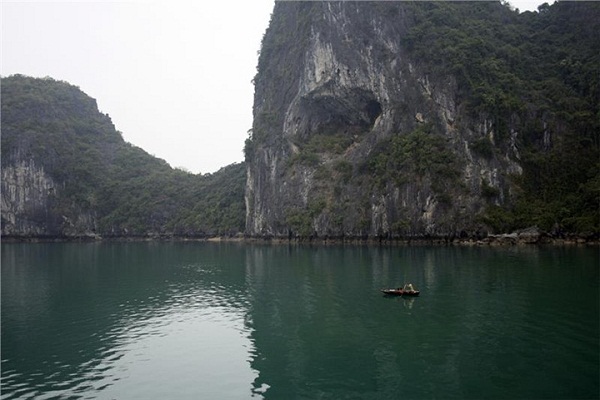
UNESCO listed Halong Bay tours as a World Heritage site due to its outstanding natural beauty and unique biological importance. Visitors who come to Halong Bay encounter formations of limestone islands that jut out of the water and are covered by jungle vegetation. It’s a dramatic sight and looks almost unworldly, as if the islands are floating on the water! Many of the rocks are hollow, with huge caves clustered inside them, and kayaking tours are one of the most popular ways to explore them.

Hanoi
As the cosmopolitan capital of Vietnam, many visitors fly into Hanoi and use it as the starting point to explore the country’s northern regions. Boasting thousands of years of rich history, Hanoi is the place to come to see ancient Buddhist temples, national museums and get a taste of Vietnam’s long and varied traditions. The Old Quarter is well worth a visit. Little-changed since the days of ancient Hanoi, the streets are named after the various trades and retail goods once sold on them.

Sa Pa
If small traditional towns, spectacular mountain views and rice terraces are what draw you to Vietnam, then head to Sa Pa. Buses depart from Hanoi, but you can expect an eight-hour journey. It’s worth it though, as Sa Pa feels like a step back in time to a more traditional Vietnam. The locals are friendly and visitors can trek by verdant rice paddies, dense forests and spectacular waterfalls.

The South Vietnam Tours – When & Where
Visit between December and April during dry season, when the temperature tends to be steadily in the high twenties (Celsius). Having said that, downpours during the rainy season from May to November tend to be short-lived and rarely put travellers off.
Ho Chi Minh City
Ho Chi Minh City is a bustling and at times chaotic place. It’s everything you would imagine from Vietnam’s largest city, only at 10 times the speed! As you fly in, you can see streets of scooters whizzing in and out traffic – so many in fact that streams of red and white lights can be seen from the plane. It’s a wild and wonderful place, with great shopping, a huge variety of dining options and fantastic nightlife. Many visitors come here for a few days of living it up, before heading to a quieter beach town to relax.

Da Lat
If you’re in Vietnam during the hotter months, Da Lat is a great option for a few days of cooler weather. It’s quite unlike anywhere else in Vietnam and is often referred to as ‘the city of eternal spring’. It’s not just the pleasant climate that draws in the crowds either; Dalat is surrounded by rolling countryside, huge waterfalls and forests and was once the playground for the elite of French colonial society.

Get away and relax in Da Lat
Nha Trang
Nha Trang is perhaps the most renowned beach resort town in the south of Vietnam. Popular with expats and international tourists alike, it’s more urban than other beach resorts in Vietnam, and for that reason is a sensible place to head for those who enjoy their creature comforts. You can also head here if you’d like to try a bit of scuba diving too!
Where To Go In Vietnam: North Or South?


Mekong Delta tours
Covering the southwestern portion of Vietnam, the expansive Mekong Delta is simply mind-blowing.  Boat trips down the Mekong River propel you straight into old-world Vietnam, and homestays in the area are becoming a popular option for those who want to really feel like they’re getting away from it all.

Thứ Năm, 6 tháng 11, 2014

Ha Long Squid Ball

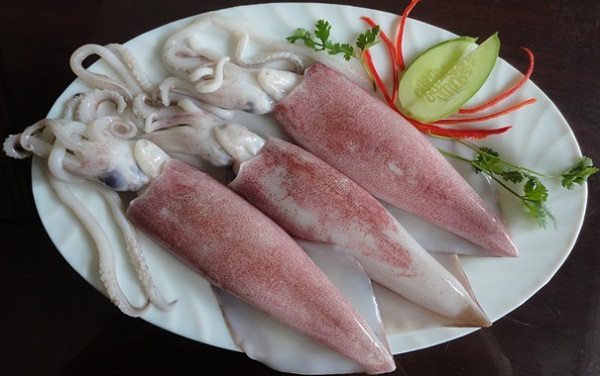
Ha Long Squid Ball- one of the most popular specialties of Quang Ninh has been named in the list of the top 50 recipes of Vietnam, according to the evaluation standard of Vietnamese specialties issued by the Vietnam Guinness Book of Records.

The dried squid ball has a fresh yellow, sweet- smelling and a nice taste
According to a survey’s results in 2012 of the Center for Agricultural Development and Research (under the Vietnam Agricultural Science Institute) in Ha Long city, this traditional dish was discovered in 1946 and was firstly made by Tai Le- a famous chief who served the domestic and international visitors in Hon Gai (during the French colonial period). Hoai Phuong-one of the 3 most well-known squid ball makers in Ha long city, is the one who was taught by Tai Le since 1946 and is now still keeping his old mortar.

Braying is the traditional technique to make the special quality of Ha Long squid ball
To date, Hoai Phuong has over 100 year experience in making squid ball. The owner - Mr. Dang Manh Hiep shared that to be a professional squid ball maker, you must be clever, meticulous, and hardworking. The very first step to make a nice dish of squid ball is selecting the squids. We should choose the squid with fresh and thick carapace on the back with a weight of around 0.8 to 2.0kg.

It is very scrupulous to “operate” the squid, too. We need to omit the bowel and the vesicle, remove all the skin. We should keep the fin on the two sides of the squids because this part would create the crunchy taste after cooked. Then, wash them with the water and slice them into pieces.

If we want the squids to be crunchy and fragrant, we should grind them in a stone mortar by our bare hands. Put the squids into the mortar one by one. It is recommended that we should not make them well kneaded, especially with the fins. In that way, the squid would be stickier and some parts that are not well grinded yet will turn to be very crunchy when you eat. When grinding, add some peppercorns to make them mix steadily with the squid meat because later the squid would stick very hard.

After that, adding some chopped onion, a little bit fish sauce and some spoons of liquid lard and mix them continuously in about 2 minutes.

Depending on the liking of each person, we can create different shapes for the squid ball. However, you should remember to prepare a bowl of water and put a little oil on your hands to prevent them from being sticky with the squid. Using a spoon to take a little squid and then put it in your hands, roll it into a ball and press it.

To fry the squid ball, we should use a sunken pan. Pour the oil into nearly half of the pan. Keep the oil hot, then lower the flame and fry the squid ball. Turn the balls over steadily; keep the flame in a medium level, not too strong, not too weak. When they turn into yellow, take them out and put them on the grill to keep them dry (if not the balls would be very greasy).

Tourists are buying squid ball at Thoan squid ball store.( in Ha Long I Market, Ha Long city)
Squid ball using with sticky rice has already become a famous specialty of the people of Quang Ninh. In Ha Long, there are even chains of street where people specialize in making this dish.

Hiep added that during the tourism season, an average of 70-80 kg of squid ball is sold on regular days and 100kg on peak days. The customers are mainly tourists from Hanoi, Thai Binh, Thai Nguyen...They buy squid ball to give their relatives and friends as a special present from Quang Ninh. Travel to Vietnam

Pham Thi Giang- a tourist from Thai Binh province commented that Ha Long squid ball is a very delicious and unforgettable dish. It can be served with white sticky rice, Cuon cake and fish sauce with pepper. It costs around VND 350,000-370,000/kg.
Ha Long Squid Ball
Ha Long Squid Ball

There are 30 units specialized in making and selling squid ball within Ha Long city; of which 23 units based in Ha Long I market and 7 in Ha Long II market) under a wide range of well-known trademarks such as Thang Hue, Hien Nhung, Tien Chuyen, Kim Thoa, Thoan, Lan Diep, Hoai phuong... Squid ball is also made in hotels, restaurants.... Paradise CruiseJasmine Cruise

It is reported that the Ha Long City People’s Committee is considering and drawing geographical indication for Ha Long squid ball. The promotion Halong squid ball product helps to enhance its competitive advantage in the market, protecting its reputation and prestige. This is a good opportunity to introduce this specialty to the national and international market.

Thứ Năm, 30 tháng 10, 2014

Cách phân biệt nhung hươu thật giả

Hàng quý tộc khó kiểm định

Đặc tính của hươu nai giong là chỉ con đực mới mọc sừng. Khi mới mọc, sừng non (thường gọi lộc nhung) có chiều dài khoảng từ 5-20cm, mềm, mặt ngoài phủ đầy lông tơ màu nâu nhạt, phía trong sừng có nhiều mạch máu. Theo ông Lê Tá, một chủ trang trại từng nuôi hươu nai khai thác lộc tại quận 12 (TPHCM) nay đã giải nghệ, nhung hươu đẹp nhất nặng từ 5-6 lạng (500-600gram). Một đời hươu đực trải qua 16-18 lần cắt nhung, mỗi năm cho nhung một lần.

Ông Tá tâm tình: Khi đi mua nhung huou nguyen chat, vì sợ lầm hàng, người sành điệu chỉ mua lộc khi họ được tận mắt chứng kiến cảnh cưa cắt mà thôi. Nhưng không phải ai cũng có kinh nghiệm, thời gian, tiền bạc, sức khỏe để lặn lội hàng chục, thậm chí hàng trăm kilômet đến các trang trại đặng chứng kiến tận mắt cảnh cắt cưa ấy. Điều này đồng nghĩa với việc nhiều người phải mua lộc nhung qua các mối trung gian. Tận dụng cơ hội đó, dân buôn lộc trời ơi thường gả những cặp lộc quá lứa cho khách với giá hàng xịn.

Theo các chuyên gia, lộc nhung tốt là loại mềm, chưa phân yên, nghĩa là khi dùng dao cắt sẽ thái được toàn bộ chứ không đụng xương tảng, không đứt (dấu hiệu chuyển sang sừng).
Cách phân biệt nhung hươu thật giả


Lương y Đỗ Mạch, ở phố thuốc Hải Thượng Lãn Ông (Q.5, TPHCM) chỉ rõ cách nhận biết giá trị thực tế của lộc nhung hươu, nai. Hươu có lông đen mịn, có đốm, còn nai thì to hơn hươu, lông cứng hơn, có màu xám hoặc nâu. Mùa thu hoạch nhung hươu thường vào tháng 2-3 âm lịch, mùa nhung nai chậm hơn 1-2 tháng sau đó. Nhung nai có màu sẫm, lông nâu, to, nặng và rẻ hơn nhung hươu. Nếu như lộc nhung nai có giá khoảng 5 triệu đồng một kilôgam thì lộc nhung hươu có giá trị hơn, khoảng từ 6-7 triệu đồng. Vấn đề ở chỗ nếu không biết cách nhận biết đâu là nhung hươu, nai thì khách rất dễ bị luộc.

Lương y Mạch tiết lộ xảo thuật làm giả lộc nhung huou tuoi nai của phường gian thương: Bọn gian tạo hình lộc nhung bằng cách nhét tiết lợn cùng xương thỏ băm nhỏ vào da chó, da dê con rồi dùng một loại keo đặc biệt dán chặt. Để chắc ăn, tiếp đó họ sẽ bôi thêm phẩm đỏ hoặc phẩm có màu nâu nhạt đặng xóa vết dán. Thấy cặp nhung đỏ màu tươi rói, nhiều người lao vào mua và… dính đạn.

Lương y Mạch khẳng định: Đây chính là cội nguồn của hiện tượng nhiều con buôn không nuôi hươu nai nhưng nếu khách có nhu cầu bao nhiêu cặp lộc nhung thì họ sẵn sàng đáp ứng trong thời gian ngắn nhất. Do vậy nếu không trực tiếp thấy chủ trang trại cắt lộc thì đừng… xông trận.

Cẩn trọng kẻo mất mạng!

Qua nghiên cứu, cả Đông lẫn Tây y đều đi đến kết luận, lộc nhung có tác dụng giúp người bệnh ngủ ngon, giảm mệt mỏi, tăng sức đề kháng cho cơ thể, giúp vết thương chóng lành và nhất là có tác dụng tốt với các chứng bệnh như tim, nhược năng, bệnh thần kinh thực vật…

Để bán được hàng và bán được với giá cao, nhiều ông bà chủ trang trại hươu nai nhân kết luận đó mạnh miệng tuyên bố thêm, nam-phụ-lão-ấu ai dùng lộc nhung cũng tốt. Người có bệnh thì dùng chữa bệnh, không bệnh thì giúp bồi bổ sức khỏe, ngăn ngừa bệnh tật.

Lại có vị chủ trại cam đoan ai dùng lộc nhung do trang trại mình cung cấp sẽ có nước da láng mịn, mái tóc mượt mà, đàn bà sung mãn, đàn ông thăng hoa. Các chứng bệnh như vô sinh, lao phổ, viêm gan, xơ gan… cũng bị dược tính của lộc nhung đẩy lùi mà dứt tiệt.

Nói đến đây, lương y Mạch lắc đầu: Không chỉ đồn uống rượu ngâm lộc nhung không lo chưa đến chợ đã hết tiền, nhiều ông bà chủ còn tuyên bố chắc nịch uống rượu lộc nhung có sức bắn phá lung tung, bắn chỗ nào là dính con trai chỗ nấy. Một đồn mười, mười đồn trăm, vậy là hình thành trào lưu… nguy hại.

Như lương y Mạch, lương y Hoàng Linh ở nhà thuốc Vạn Xuân cho rằng, lộc nhung có vị ngọt, mặn, có công năng bổ tủy, trợ thận âm…, biết dùng rất tốt cho sức khỏe nhưng nếu lạm dụng sẽ phản tác dụng bởi không phải ai dùng cũng tốt, càng không phải là thuốc tiên chữa bách bệnh.

Lương y Linh cảnh báo: Nhung hươu là chất bổ âm, chỉ dùng tốt với người thận dương không đủ. Những người bị cao huyết áp, có hội chứng âm hư với biểu hiện người gầy, hay có cảm giác sốt về chiều, môi khô, miệng khát, đại tiện táo, tiểu tiện sẻn đỏ… tuyệt đối không được dùng lộc nhung. Người còn trẻ hoặc có sức khỏe bình thường khi dùng lộc nhung phải tiến hành theo dõi tình trạng sức khỏe. Nói chung mọi người không được tùy tiện dùng lộc nhung khi chưa có chỉ định hoặc tham khảo ý kiến của các lương y, bác sĩ. Đã có nhiều trường hợp tự ý sử dụng lộc nhung và sử dụng vô tội vạ dẫn đến hậu quả thương tâm: Toàn thân bị co giật, động huyết, ngực phát nóng, liên tục đổ mồ hôi trộm… để rồi khỏe đâu không thấy, chỉ thấy bệnh tình càng nặng thêm.

Thứ Tư, 29 tháng 10, 2014

Ba Hang and Cap La Fishing Village in Halong bay

Ba Hang Fishing Village in Halong bay

Ba Hang (Three) Caves is one of 4 fishing villages serving major tourist attractions in Halong Bay. Located in the region of well-known three caves, located next to thiencung (heaven) grotto, daugo grotto ... Visit Ba Hang Fishing Village in Halong bay with Halong bay cruise


with about 50 families...Ba Hang (Three) Caves is one of 4 fishing villages serving major tourist attractions in Halong Bay. Located in the region of well-known three caves, located next to thiencung (heaven) grotto, daugo grotto ... with about 50 families, Ba hang fishing village for tourists to visit, purchase and sale of marine, kayaking service... Read more:  
Paradise Cruise Halong bayIndochina Sails cruise Halong bay

Ba Hang Fishing Village in Halong bay
Ba Hang and Cap La Fishing Village in Halong bay


Cap La Fishing Village in Halong Bay

Cap La is one of the small fishing village (lying between Bai Tu Long & Halong Bay). There are 80 family holders with more than 200 people living in this village. They live by fishing. Children go to school until they are 12 years old, then they stop for working as fish man.

No national electricity system here. The local have to use the electricity generators. It is hard and expensive to buy clean water and petrol her.

Thứ Tư, 15 tháng 10, 2014

Halong Bay Squid Fishing

Squid fishing on Halong Bay at night is an interesting activity at which tourists can experience the feeling of being a fisherman. Tourists will have the instruction from local fishermen about how to fish a squid in the sea.
Night Squid fishing is the most interesting activity and wonderful pleasure of the night journey on Halong Bay cruise. Tourists are provided with fishing rods and racquets so that they can actively use them to catch squids. Tourists must be excited to clearly see light-drunken shoals of squids lazily hovering around; and, step by step each squid is enticed and picked up, remaining totally fresh and striving convulsively. Especially, during the squid season, it would be common to see large shoals of squids surrounding the cruiser and each tourist may catch an average of 30 squids for each squid fishing night.


The squids caught will be used to make dishes for tourists. This is also an ideal time to gaze Halong bay by night. The sea water surface is sparkling with reflected light from cruises anchored on the bay. Foreign tourists are extremely fond of boiled whole squids because when eating, they can enjoy the interesting feeling of ink line breaking out pitch-black in the mouth, splashing all over the face and taking pictures. The tourists eat while singing Karaoke and dancing. In alcohol yeast, everyone becomes enthusiasm and excited singers and dancers.

Thứ Năm, 9 tháng 10, 2014

Halong Weather

Halong weather is typical for tropical coastal climate, which has two main seasons all year around. From April to September, it is often hot and humid; from October to March the weather is dry with some cold months.
The average temperature of Halong Bay tours is 23.7 degree Celsius. In the summer, the average temperature is 34.9oC while the maximum temperature recorded is 38oC. The heat may be reduced thanks to its location amid the mountains and grottos. On the other hand, during winter, it might get as low as 13.7oC on the average, and the lowest could be as low as 5oC. Some may find it hard to travel in January when the weather can be biting cold. Read more: V'spirit cruise
The city has a relatively high average annual rainfall of 1,832mm, which is unevenly distributed depending on the two main seasons. During the rain season, and also summer, from May to end of August, the rainfall amounts for 80-85% of the total rainfall of the year, with the maximum of 350mm in July and August. Winter, and also dry season (from November to April of the next year) witnesses little raining of around 15-20% of the total rainfall, with the minimum amount varying in between 4 and 40mm during December and January.
Halong Weather
Halong Weather

Halong is one of the most humid cities in Vietnam with the average annual humidity at 84%, which fluctuate from a minimum of 68% to a maximum of 90% in a year. Travel Vietnam
Due to the unique geological and topographic characteristic, Halong has two kinds of monsoon, which are Northeast monsoon in the winter, and Southwest monsoon in the summer. The average wind speed is 2.8m/s, and Southwest monsoon is the strongest one with its speed reaches 45m/s.
Thanks to the nature of a closed-sea area, Halong is lucky not to be much affected by heavy storms. The strongest storms on the bay normally are at level 9 and 10, hardly anytime reaching level 11.

Thứ Hai, 25 tháng 8, 2014

V’Spirit Junk cruise Halong bay

Since its inception in 2012, V’Spirit Junk has held true to its original commitment of taking the very best aspects of classic, comfortable cruising and updating them to reflect current lifestyles.
What sets V’Spirit cruise apart from other vacation choices is our passionate dedication to providing guests with a cruise experience that exceeds expectations. Our goal is to be the best at providing our clients with everything that makes cruising popular today– a unique and interesting itinerary, high quality, comfortable accommodations, attentive service from our staff, and exceptional cuisine.
V’Spirit Junk cruise Halong bay

V'SPIRIT CRUISE 3D-2N


Lan Ha Bayhas 139 beautiful, small and pristine sandy beaches, many of which lie between two stone mountains. Just imagine that after a long day exploration of caves and grottoes, you will feel entirely relaxed bathing the azure-blue water of the beaches or lying on the white sandy beaches. Your trip will be much more enjoyable with a kayaking amidst the bay.
Exploring Lan Ha Bay with a small boat is a part in your unforgettable cruising experience with V’Spirit Classic.
Day 1: Hanoi – Halong Bay (L/D)
12h00 – 12h30            Embark on V’Spirit Classic Cruise followed by a short cruise briefing.
13h00 – 15h30            Savor a delectable lunch as V’Spirit cruise Halong bay among the limestone islands.
15h30 – 16h30            Kayak among the hidden areas of the bay, around the Bo Nau Cave area. Back to the V’Spirit Classic
16h30 – 17h30            Cruising to Soi Sim island. Go swimming and relaxing at the beach of Soi Sim or climb up to the top of the island for a panorama view of Halong Bay cruise.
17h30                          Return to the main boat for a shower. Relax or snap photos as the sun starts to set.
19h00                          Dinner is served. Socialize with other guests, fish for squid, or just laze around.
Overnight on board.
Day 2: Halong – Lan Ha Bay (B/L/D)
06h30 – 07h00             Start your day with Tai Chi exercises or a photo hunt
07h00 – 08h30            Have breakfast on board.
08h30                          Transfer to a Day Boat for a cruise to Lan Ha Bay.
08h30 – 12h00            Explore the Light and Dark Cave by kayak. Swimming and relaxing at the beaches
12h00 – 14h00            Return to the day boat. Enjoy a barbecue lunch on board. Kayaking more to explore Lan Ha Bay or just leisure at the beaches.
14h00 – 14h30            Visit a floating Pearl Farm and learn the technique for making high quality pearls.
If the weather permits, we continue along to Three Peach Beach for swimming.
14h30 – 16h00            Cruise back to the main boat
19h00                          Enjoy dinner and overnight on board (B/L/D)
Day 3: Halong Bay – Hanoi (B/L)
06h30 – 07h00             Join Tai Chi exercises or a photo hunt.
07h30 – 08h30             Have breakfast at sunrise.
08h30 – 09h30             Explore the amazing Sung Sot Cave – the nicest cave in Halong Bay.
09h30                          Return to the boat. Freshen up and check out of your cabin.
09h30 – 10h30             Continue your cruise exploring the Bay, passing Ba Hang fishing village, Dog Islet, and more.
10h30 – 11h30            While heading back to the habor, watch the cooking demonstration before enjoying a traditional Vietnamese lunch.
12h00 – 12h30            Disembark V’Spirit Classic
12h30                          Transfer back to Hanoi.
Trip finishes at around 16h30.
Rates:
3D-2N1 Jan – 31 Sept 2014
Cruise CabinRate/personSingle Supp.Child (5-8)
Deluxe$204$78$102
Triple$613
Premium$238$38$119
Premium Triple$713
Family Connecting$817
Surcharge US$ 34 per person on 24 & 31 Dec, 2014
Child policy:   Children under 5 years old are FOC, sharing room with parents.
Children from 5 to 8 years old are charged 50%, sharing room with parents. Children from 9 to 11 years old are charged 75%, sharing room with parents.
Inclusive of
  • Welcome Drinks
  • Cruise Itinerary and Program
  • Entrance and Sightseeing Fees
  • English-speaking Tour Guide on board
  • Day boat to Lan Ha Bay
  • Deluxe Cabins and A/C and en-suite Bathrooms
  • Vietnamese and International Breakfast, Lunch and Dinner
  • Kayaking
Exclusive of
  • Airfares, Car Transfers
  • Beverages, Tips and Personal Expenses
  • All other services not clearly mentioned above
Dining Room
Cuisine: Vietnamese Seafood & Various International Dishes
Breakfast 07:30 – 8:00 daily
Lunch 13:00 – 14:00 daily
Dinner 19:00 – 20:00 daily
Seating capacity 14 passengers